Changelog

What's new in Offstage

Week of 28 June 2026 · "Offstage on your phone, send by email, copy a relevant document, now in French"

Highlights

Offstage, now on your phone

The whole agency now travels in your pocket: shows, contracts, updates, tasks, and the full analytics suite, all a real mobile experience.

Offstage was built desktop-first, and the phone was always the place you couldn't quite get work done. That changes with this release: the whole agency now travels in your pocket.

Every core surface (your calendar, a show and its contract, the latest updates, your tasks, and the full analytics suite) is now a real mobile experience designed for the phone in your hand. The booker standing in a venue between soundcheck and doors can get real work done from there.

Your whole workflow, pocket-sized

From your phone you can open any show and read or edit its details, jump straight into its contract or invoice, post a latest update and @mention a teammate to hand work off, work through your tasks, and pull up the numbers. The things you used to leave until you were back at a desk now happen wherever you are.

Built for one hand, on the move

The navigation collapses into a bottom tab bar you can reach with your thumb, long tables scroll cleanly instead of spilling off the edge, dialogs and pickers open as full-width sheets, every button is a comfortable tap target, and scrolling stays smooth from top to bottom.

Analytics that travel with you

The whole analytics suite works on the phone. Tap into a venue's performance, scroll the month-over-month revenue from the shows you booked there, and tap any bar to break that month down into the individual shows. It is the same picture you would see on your laptop, in your hand at the venue.
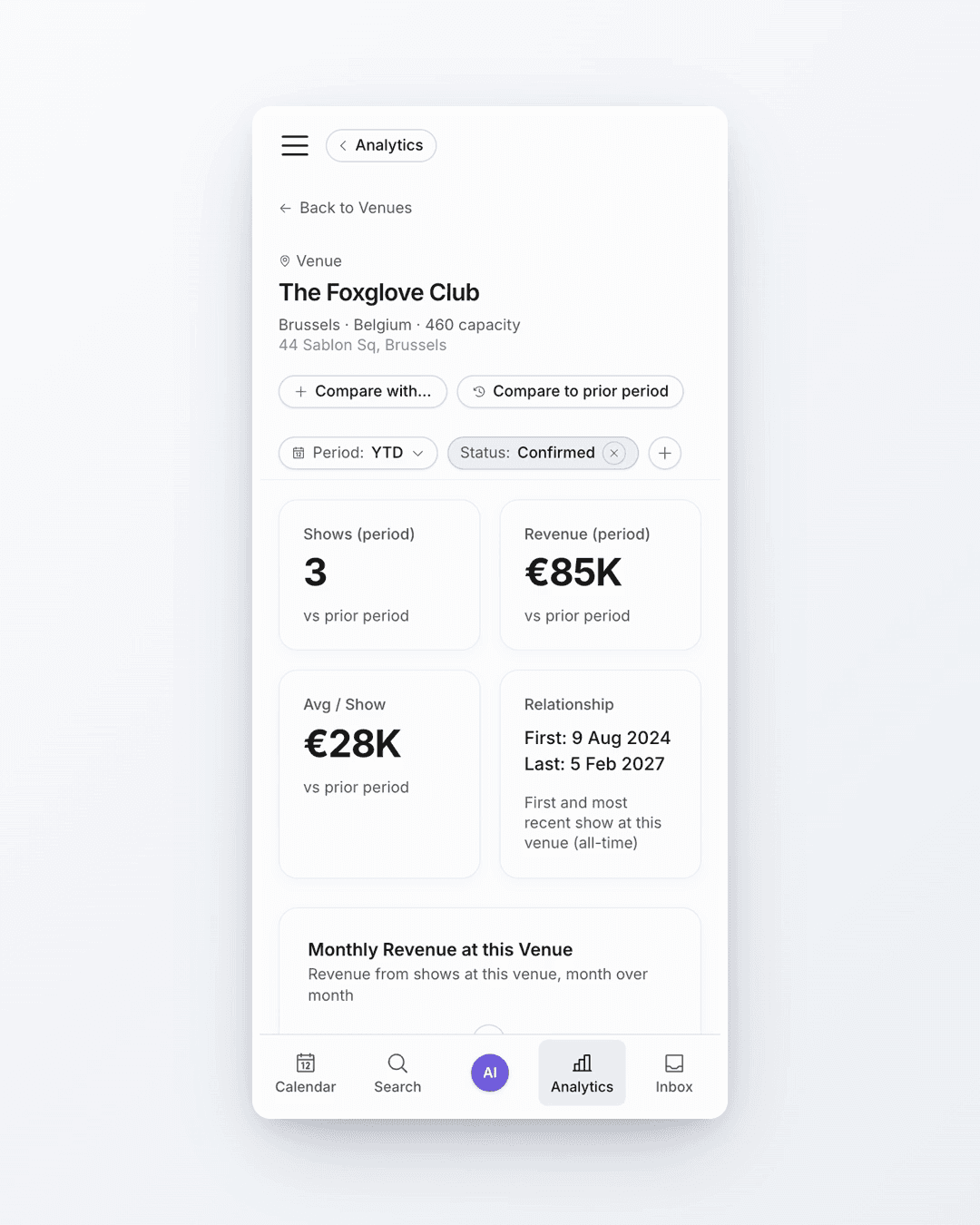
A venue's analytics drilldown on mobile
A venue's performance, drilled down on the phone.

Tap a month, see the shows behind it

Every number stays explorable. Tapping a revenue bar opens that month's shows right there, so a figure is never a dead end, it is a way in.
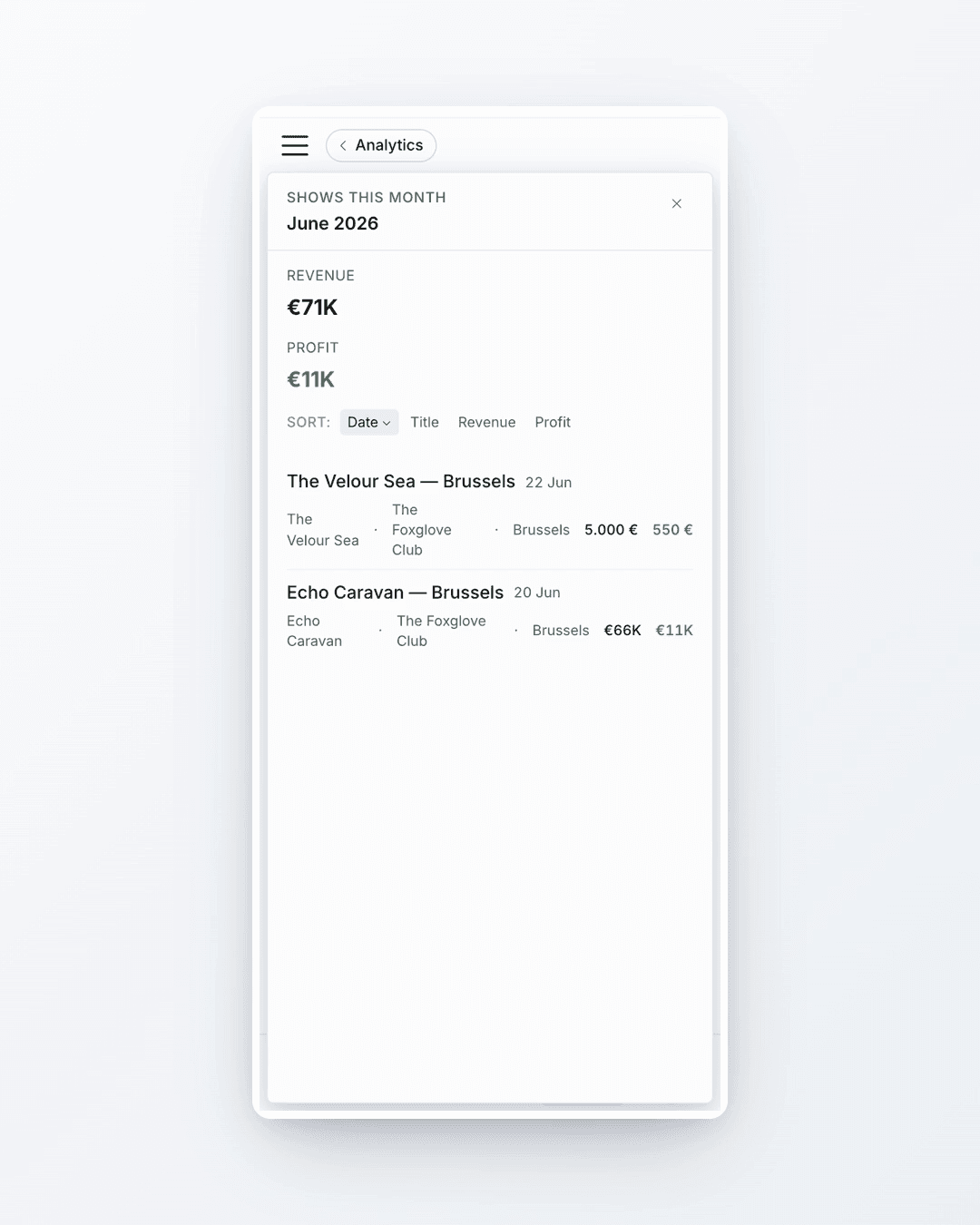
A month's shows opened from the revenue chart on mobile
Tapping a bar opens that month's shows.

The same Offstage you use at your desk

It is the same live data, the same permissions, and the same documents as the desktop. What you change on your phone is instantly on your laptop, and a teammate's edit shows up on your screen. There is nothing extra to install: open Offstage in your phone's browser at itsoffstage.com, sign in, and everything is there.
Offstage now speaks French

The whole app is now available in French, joining English and German.

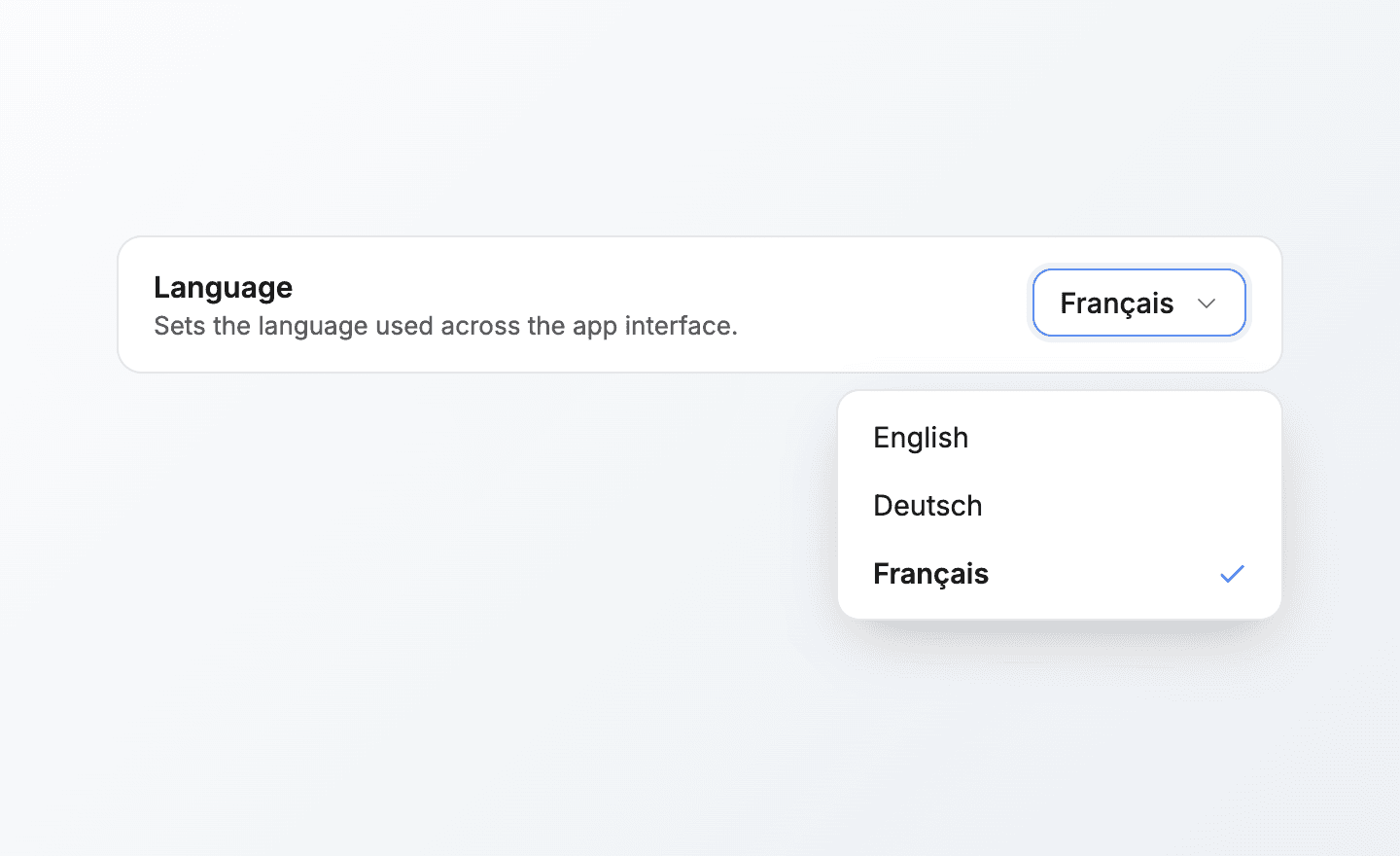
Offstage now speaks French. Switch your display language to Français in Settings → Preferences and the entire interface follows, alongside English and German.

What changed

Everything is translated: the calendar, artists, contracts, and invoices, right down to the menus, buttons, dates, and status labels. Your data never changes; only the language of the interface does.

Language picker in Settings, Preferences
Settings → Preferences: pick English, Deutsch, or Français.

Each teammate picks their own

Each person picks their own language. Your Paris-based booker can work entirely in French while a colleague in Berlin keeps everything in German, from the exact same shared workspace.

Also in this release

German got a polish pass too, including renaming the old "Ressourcen" to the clearer "Unterlagen" across every attachments surface.

Send contracts and invoices by email

Email contracts and invoices to your clients straight from Offstage, with the PDF attached.

You can now email contracts and invoices to your clients directly from Offstage, with the PDF attached automatically. No more downloading the file and attaching it in a separate mail app.

How it works

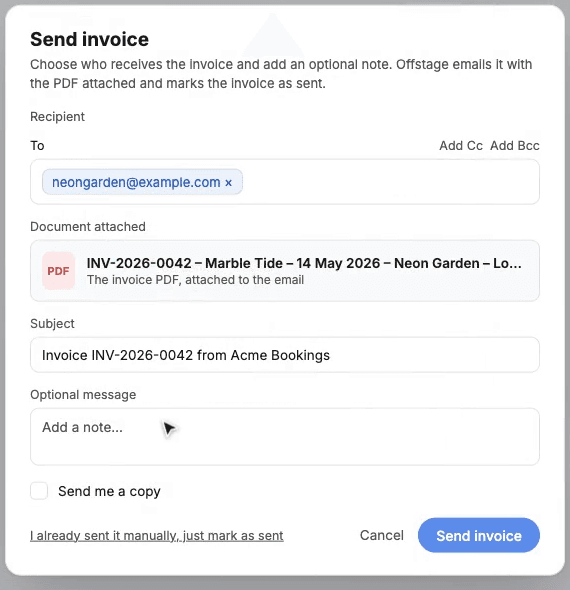
Open an invoice or contract and click Send. Add recipients in the To, Cc, and Bcc fields, write an optional note, and tick "Send me a copy" if you want one. The current PDF attaches itself, and the status moves to Sent the moment it goes out.

The send dialog with recipients, the attached PDF, and Send me a copy
To, Cc, and Bcc, the PDF attached automatically, and an option to send yourself a copy.

Example

The moment a show is confirmed, send the contract to the organizer in seconds, then send the invoice straight after, without leaving the event.

Signing contracts

Contracts are emailed for your counterparty to sign offline and return. You then upload the signed copy back onto the contract, which files it against the booking and automatically sets its status to Signed.

Start a document by copying a relevant one

Create a contract, invoice, itinerary, or any other document by copying a relevant existing one.

When you create a contract, invoice, itinerary, or any other document, you can now start by copying a relevant existing one, alongside starting from a blank page or a template.

How it works

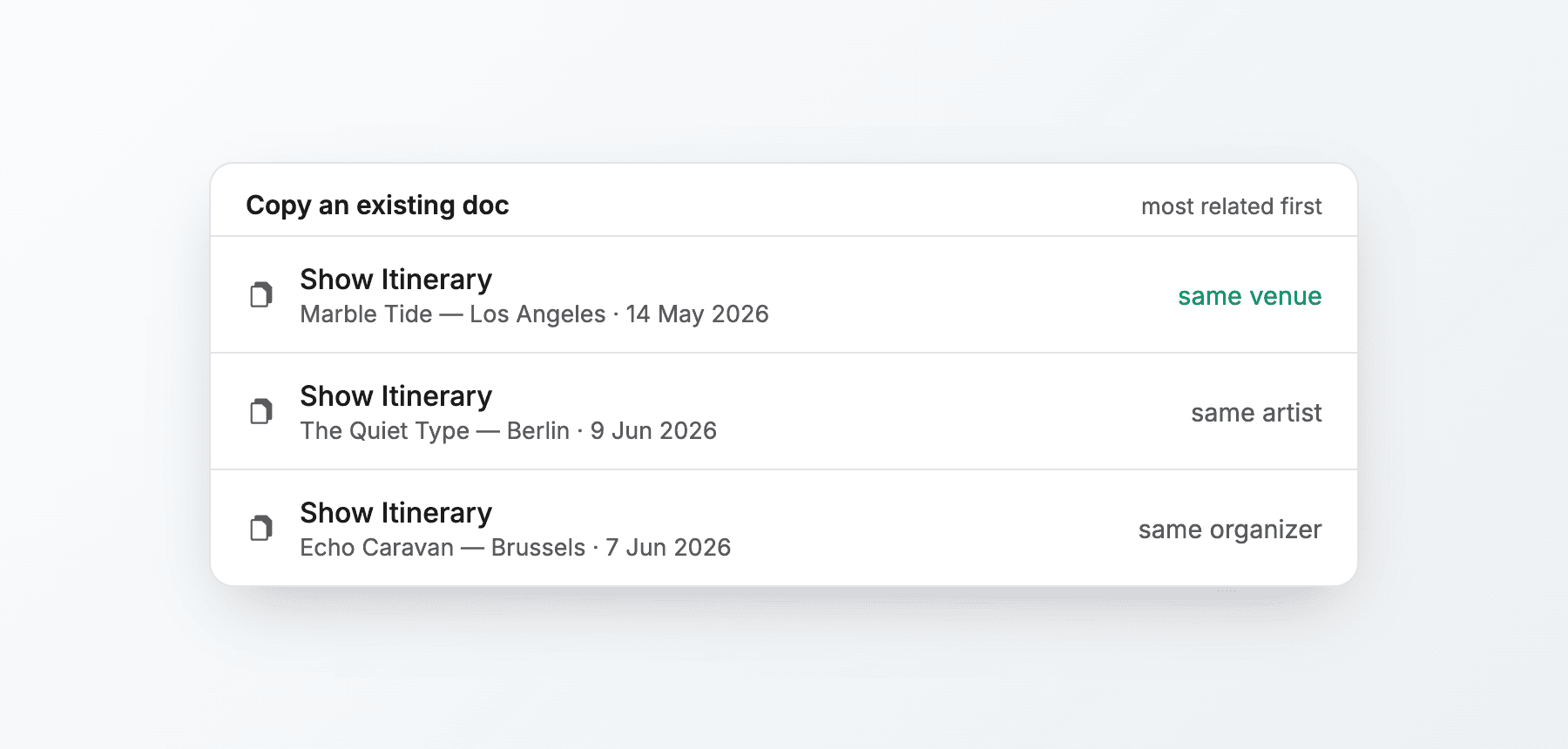
In the create window, open the template picker. Offstage automatically suggests the most relevant documents to copy, ordered by the ones that share the same venue, then the same artist, as the event you are working on. Pick one and its content comes across, while the live fields relink to your new event.

Suggestions ranked by shared context
Each suggestion is tagged by what it shares with your event, same venue first, then same artist, then same organizer.

Why it helps

An itinerary is the perfect example. It holds a lot of repeated venue details you would otherwise retype, like the address, capacity, load-in and soundcheck times, and the hotel, none of which fill in on their own. Copy a recent itinerary for the same venue and all of it comes along instantly.

Where to find it

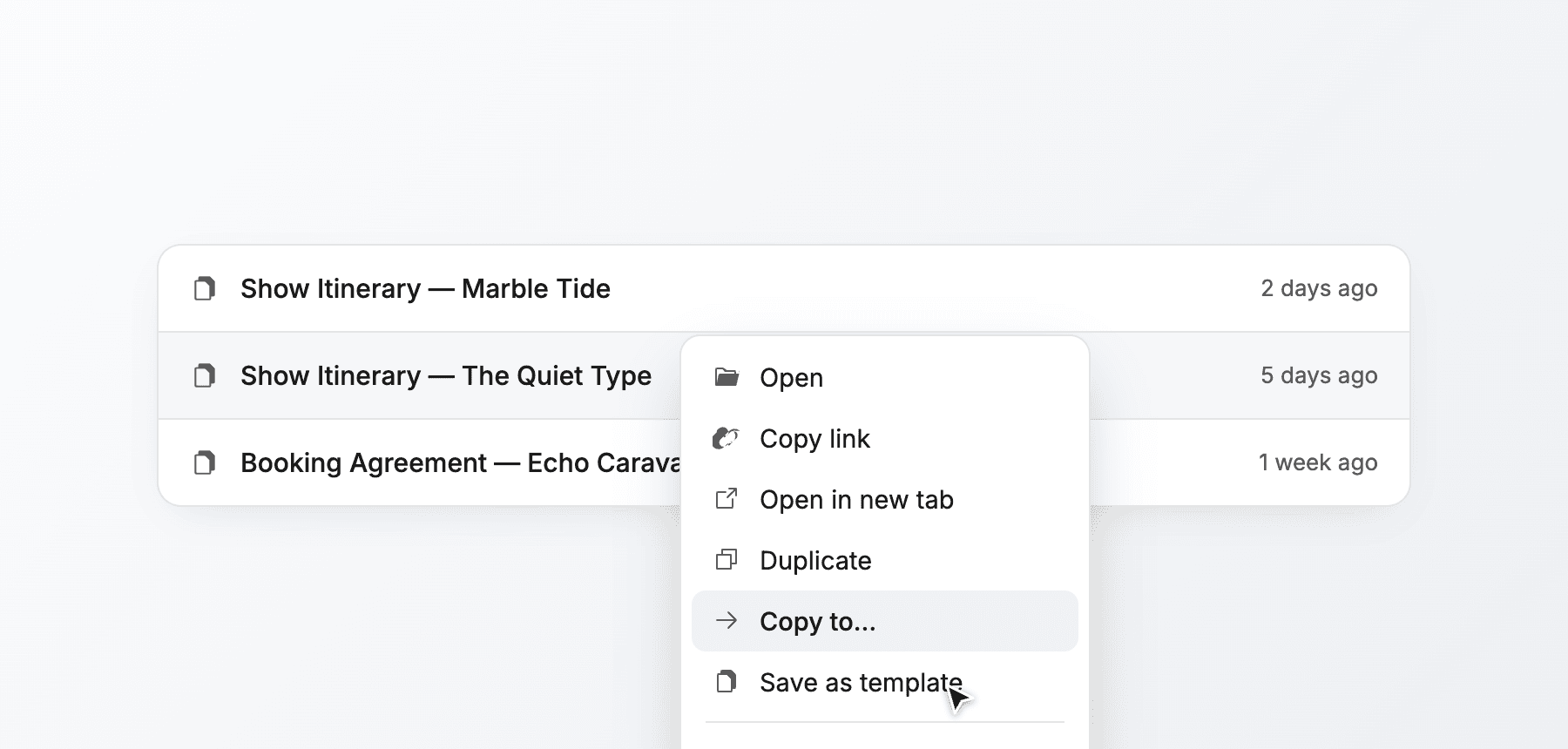
Start a new document from an event (New resource, then Add document), choose the type, then open the template picker to see the suggestions. You can also right-click any document in the list and choose "Copy to…".

Right-click a document and choose Copy to
Right-click a document and choose "Copy to…".

A full document editor, built in

Copying from an existing document is one small part of something bigger: Offstage has a complete document editor built right in, a little like having Google Docs inside your agency workspace. You write and edit contracts, invoices, itineraries, or any other document in Offstage itself, and you can start from a reusable template whenever you want one.

Every agency starts with ready-made example templates from day one, and we import your own custom ones for you. Each document lives on the event it belongs to, so nothing is scattered across laptops or lost in a shared drive. It all sits in one place: easy to find, easy to manage, and easy for the AI to read and edit alongside you.

Access is controlled per document. Share one externally by email invite or a shareable link, so an organizer can review a contract in a click and leave comments or suggested changes. Finished PDFs are generated inside Offstage with your own headers and footers, then saved back onto the event.

More features

Your workspace starts full of sample data

Every brand-new agency now opens into a fully populated workspace instead of an empty shell. It is a large, coherent demo dataset: dozens of artists, venues and organizers across many countries, and hundreds of shows spread across past, current, and upcoming months, all wired together with realistic contracts, invoices, tasks, and revenue so the dashboards, analytics, and map actually fill in rather than showing zeroes.

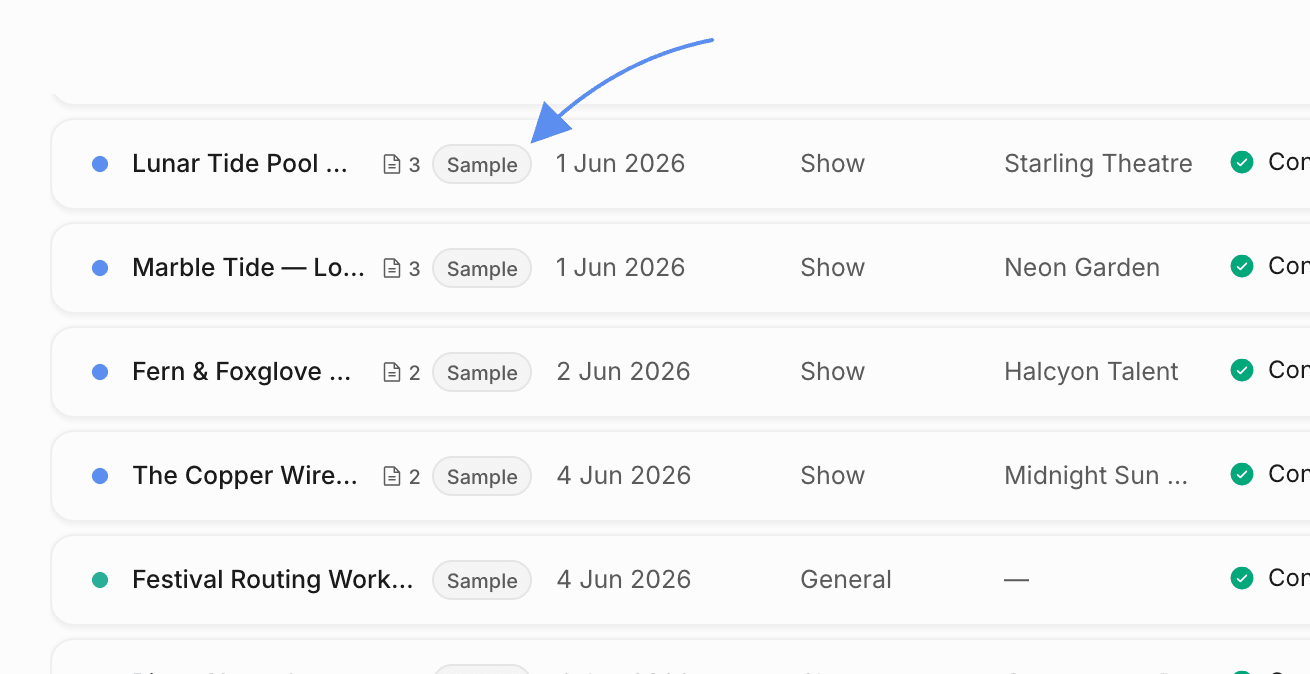
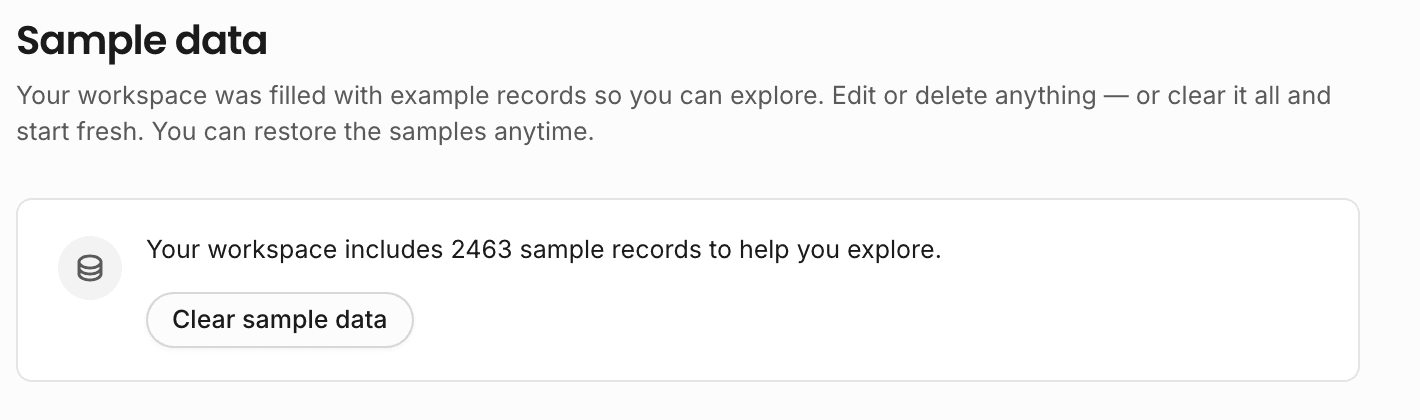
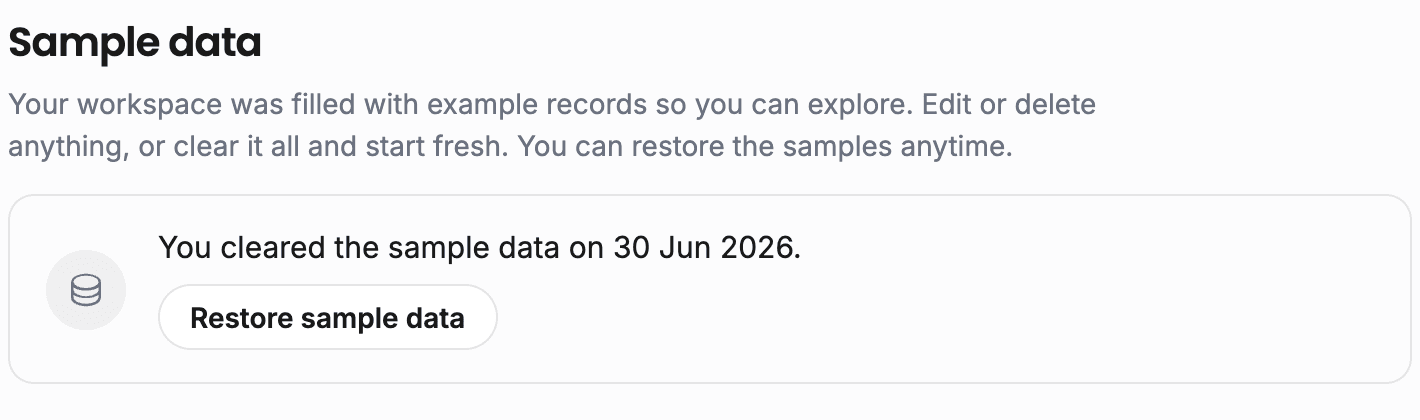
Every sample record carries a small Sample chip so it is never mistaken for your own data, and the moment you edit one it quietly becomes real and survives a clear. When you are ready to make the workspace yours, clear everything in one click from Settings → Data; the same panel restores the samples later if you want to keep exploring, and your own records are never touched either way.

Sample records tagged with a Sample chip
Every seeded record is tagged with a Sample chip, so it is never confused with your own data.
Clear sample data from Settings to Data
Settings → Data: clear all the sample records in one click when you are ready.
Restore sample data
The same panel restores the samples anytime if you want to explore again.

Split an invoice into multiple due dates

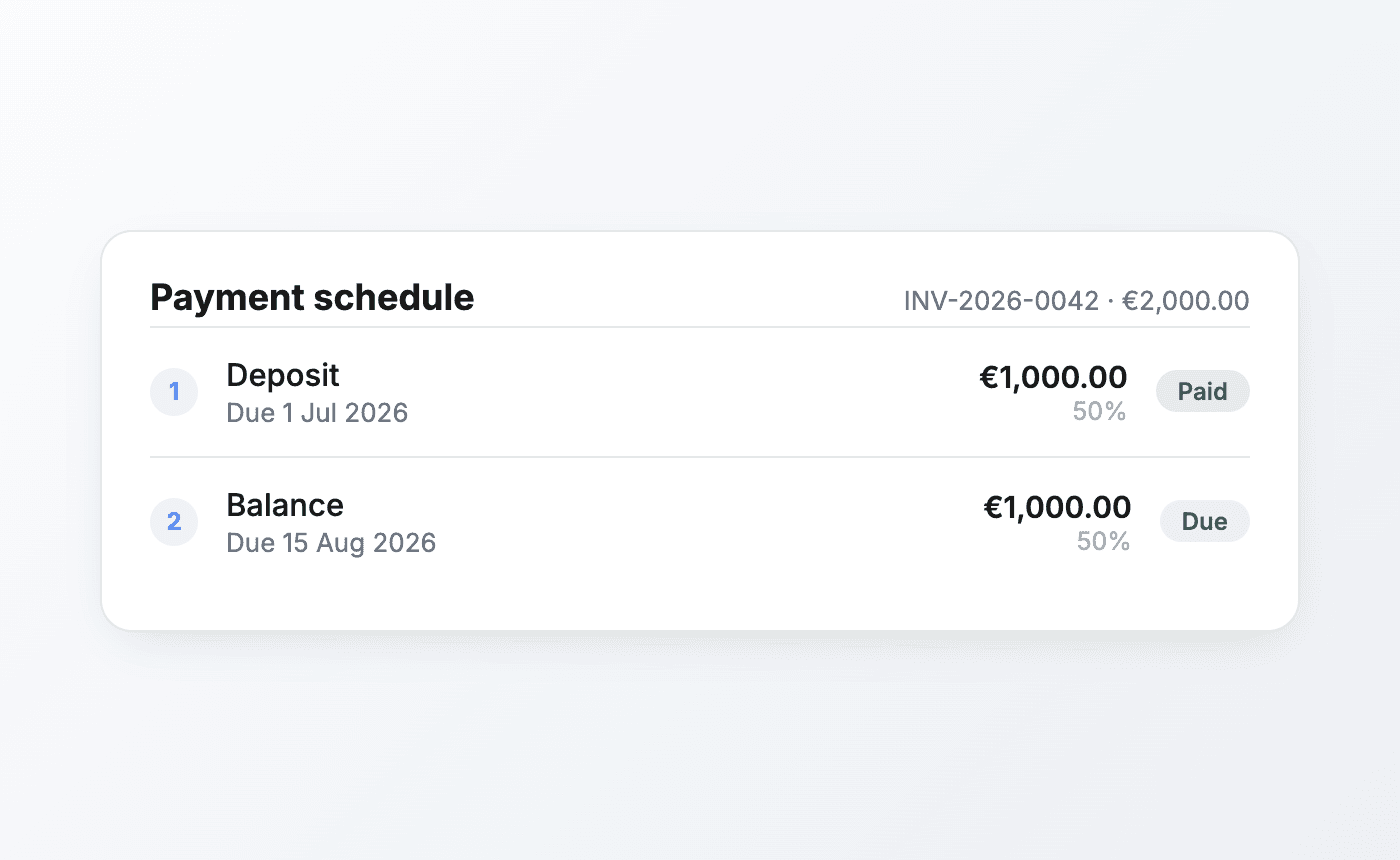
An invoice no longer has to be paid in one go. You can give it a payment schedule of several partial due dates, for example a deposit now and the balance after the show, each with its own date and either a percentage or a fixed amount.

Payments are still recorded against the invoice as a whole; Offstage works out which instalments they cover, oldest first, and flips the invoice to Overdue the moment any instalment is past its date and still short. A reminder fires per instalment as each date approaches, so a long payment plan looks after itself.

Invoice payment schedule with two due dates

Watch a “loop” table fill in as you edit

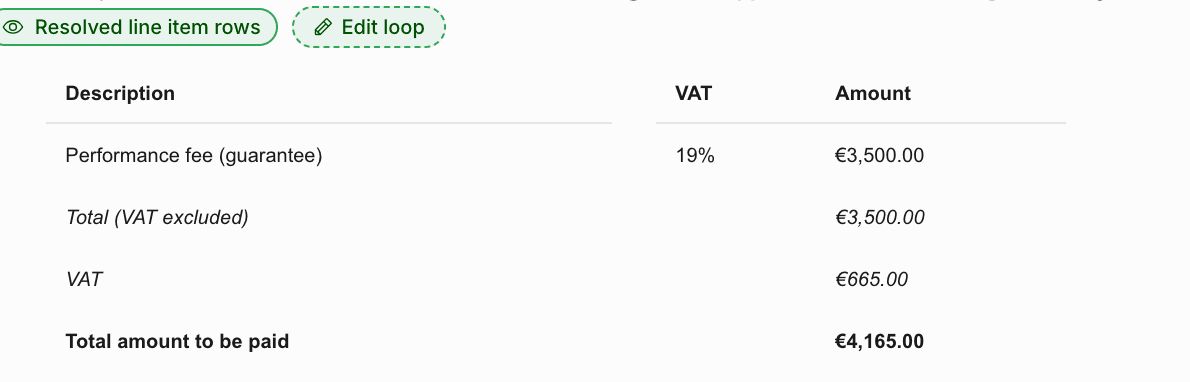
You can build a table automatically from your event's data, for example the list of revenue lines you are billing on an invoice. In Offstage these are called “loop” tables, because the document loops over each item in a list (in this case, the revenue lines) and adds a row for it.

Until now, the finished table only appeared once you switched the document to read view. Now, you can also see the finished table in edit view, with the real amounts, totals, and VAT. You see exactly what it will say before you send it, so no more flipping to read view and back to check a single number.

Loop table preview while editing a document

Resources, grouped by type

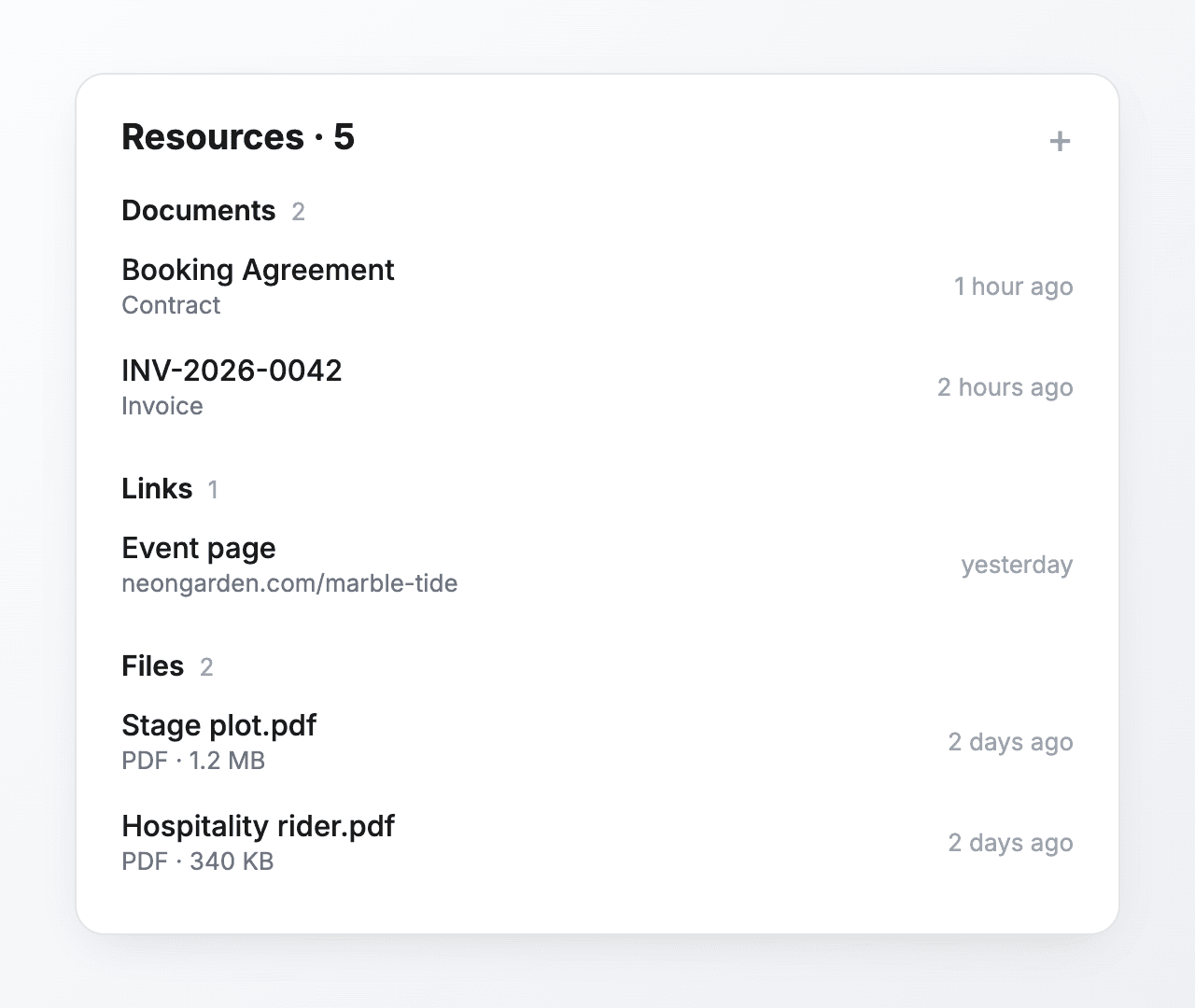
The Resources area that holds everything attached to an event, artist, or document now sorts those attachments into clear Documents, Links, and Files groups instead of one flat list. Contracts, invoices, and itineraries sit under Documents; pasted URLs under Links; uploaded PDFs and images under Files, each group with its own count. On a busy event with a dozen attachments you find the right one at a glance instead of scanning a long mixed list.

Resources grouped into Documents, Links, Files

Clearer roles and permissions, and more read-only access

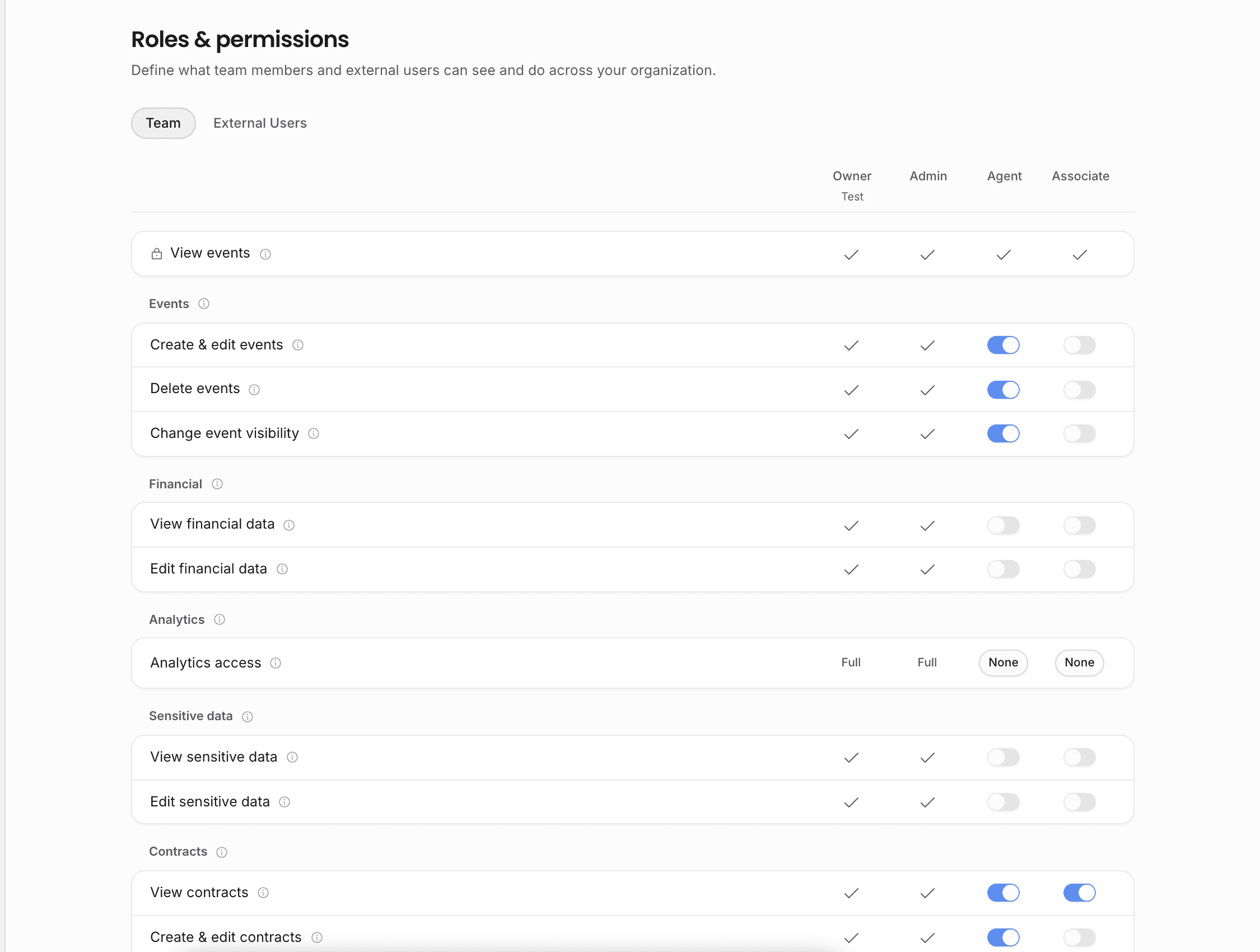
Owners and admins get a clearer Roles and permissions matrix for deciding exactly what each role can see and do, permission by permission, for both team members and external collaborators. Alongside it, far more of the workspace is now reachable read-only: instead of hitting a locked page, a member without edit rights can open the team roster, templates, shared schedules, and more, seeing the information while edits stay gated to the right people.

Roles and permissions matrix

Build a contract's value from the lines you choose

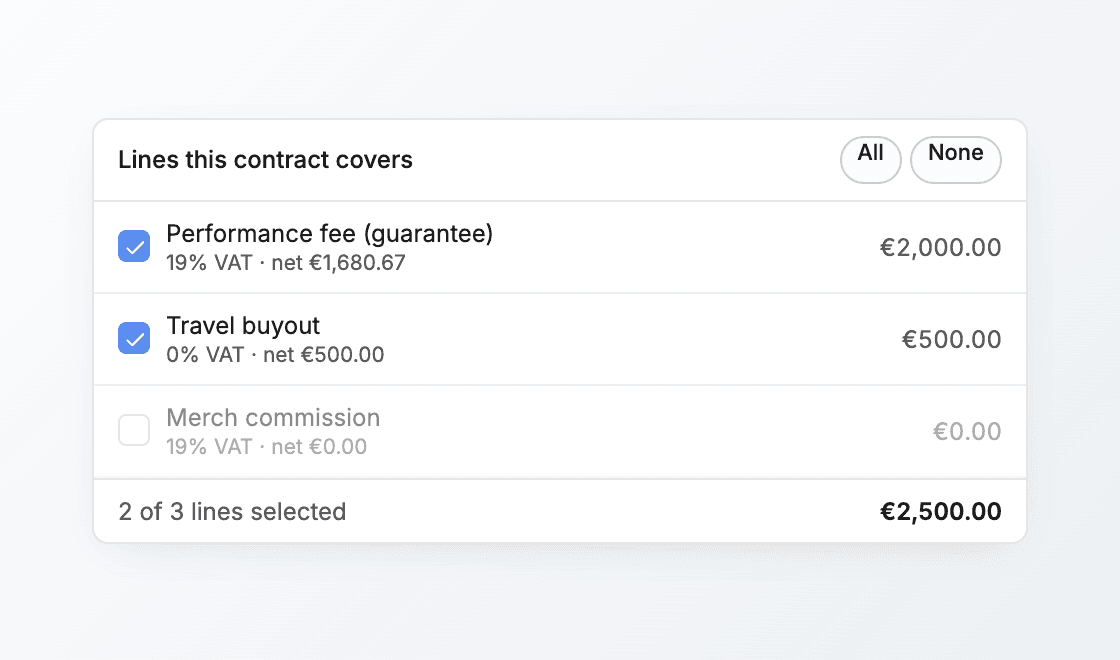
A contract's value can now be built from the actual revenue items it covers, instead of being typed in by hand. When you create the contract you select the specific revenue lines it represents, and its deal value is summed from that selection.

You can still override the figure manually if needed.

Contract line picker building the deal value

Credit notes

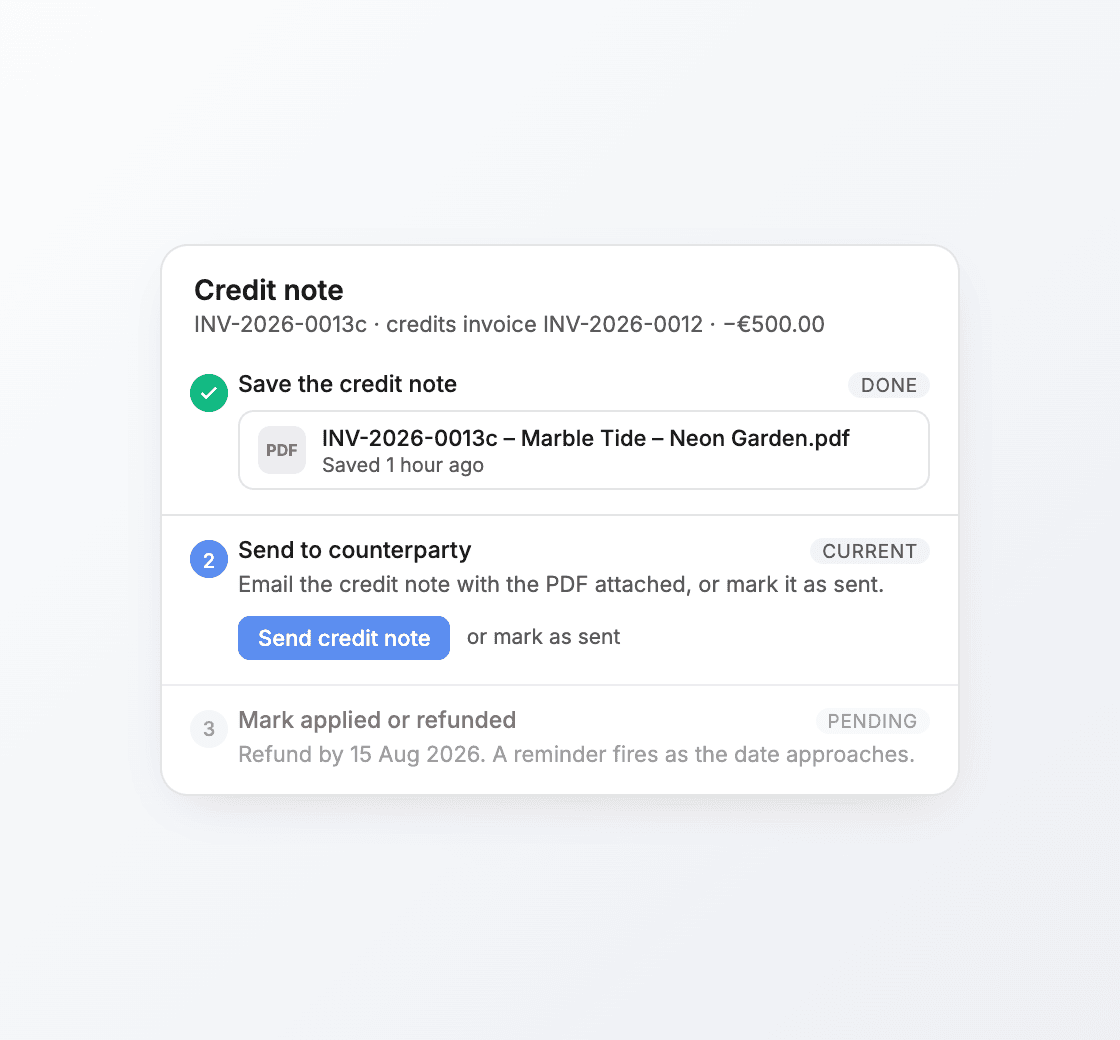
When a show is cancelled and an issued invoice needs reversing, you can now issue a proper credit note. It draws the next number from the same per-year invoice sequence with a trailing "c" (so INV-2026-0012 is credited by INV-2026-0012c), which keeps your numbering continuous and auditable. Like an invoice, a credit note has its own Save → Send → Mark refunded lifecycle.

Credit note lifecycle rail
A credit note has the same Save → Send → settle lifecycle as an invoice.

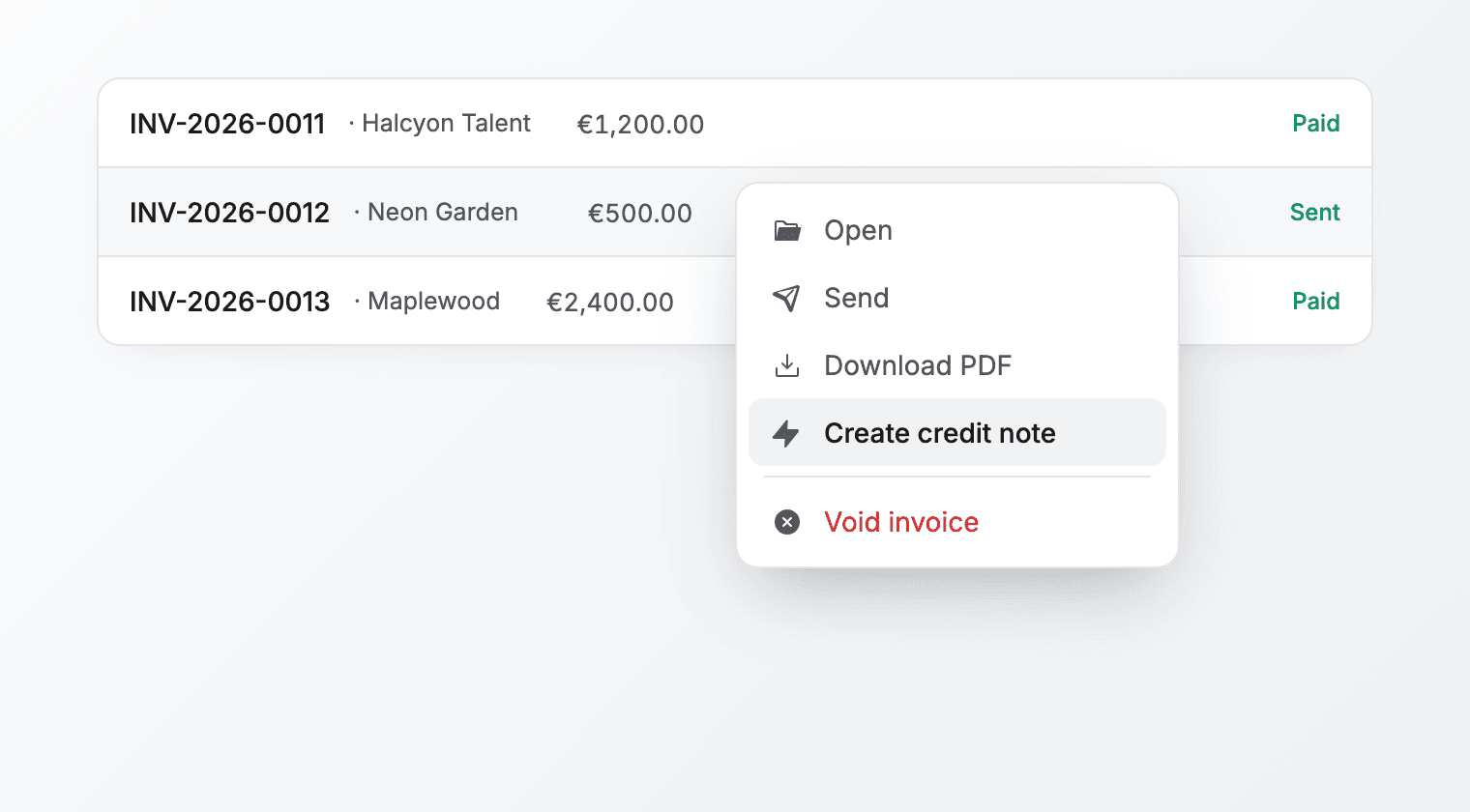
Create one in two ways. Right-click any invoice and choose "Create credit note", or start a new document, pick Credit note as the type, and choose the invoice it reverses. Either way it pre-fills from the source invoice.

Create credit note from the invoice menu
Right-click an invoice and choose "Create credit note".

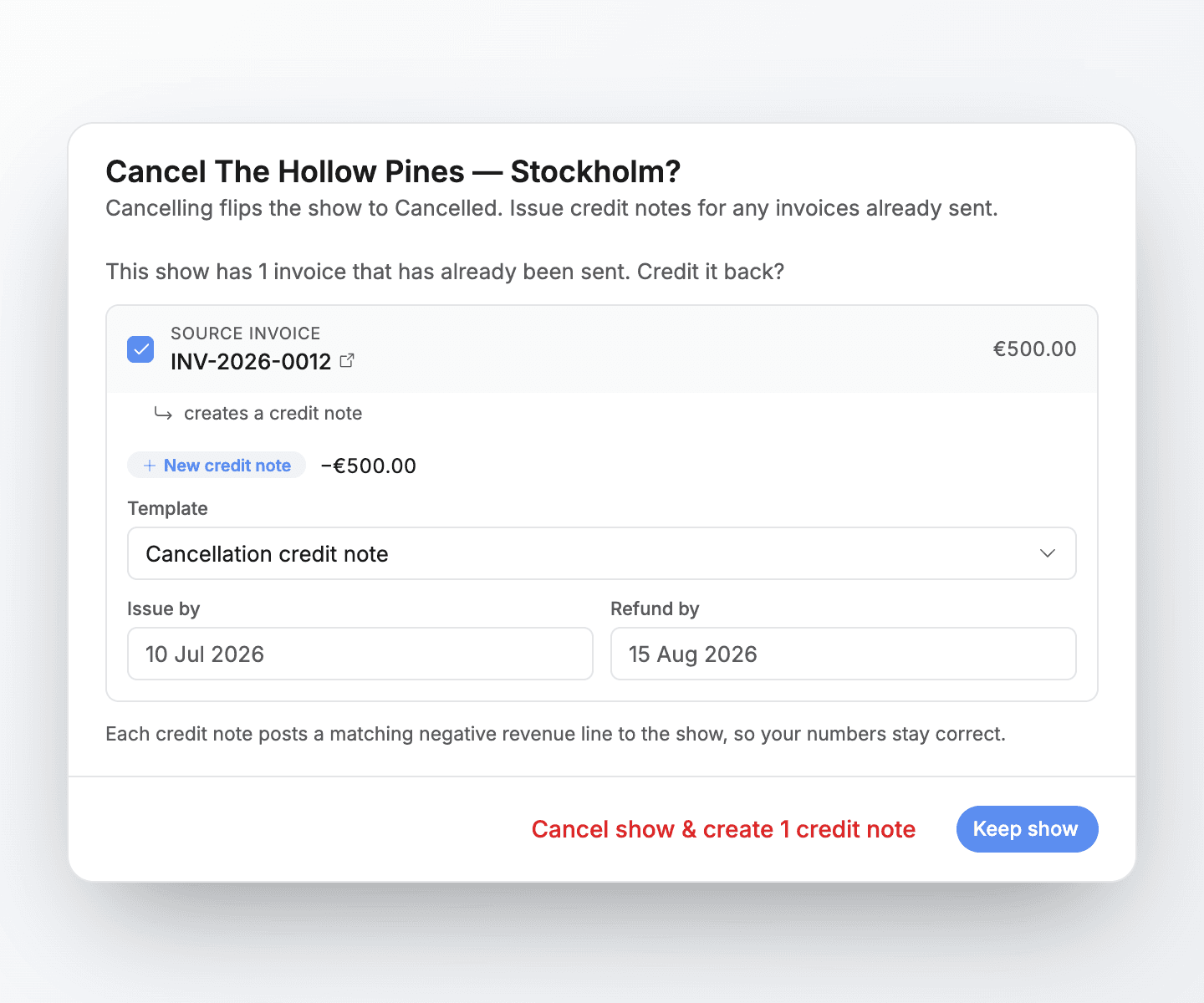
Or cancel the whole show. Cancelling a show that already has sent invoices offers to credit each one: pick which invoices to credit, choose a template and an issue-by / refund-by date, and Offstage creates the credit notes for you.

Cancel-show flow suggesting credit notes
The cancel-show flow suggests a credit note per sent invoice, with the dates.

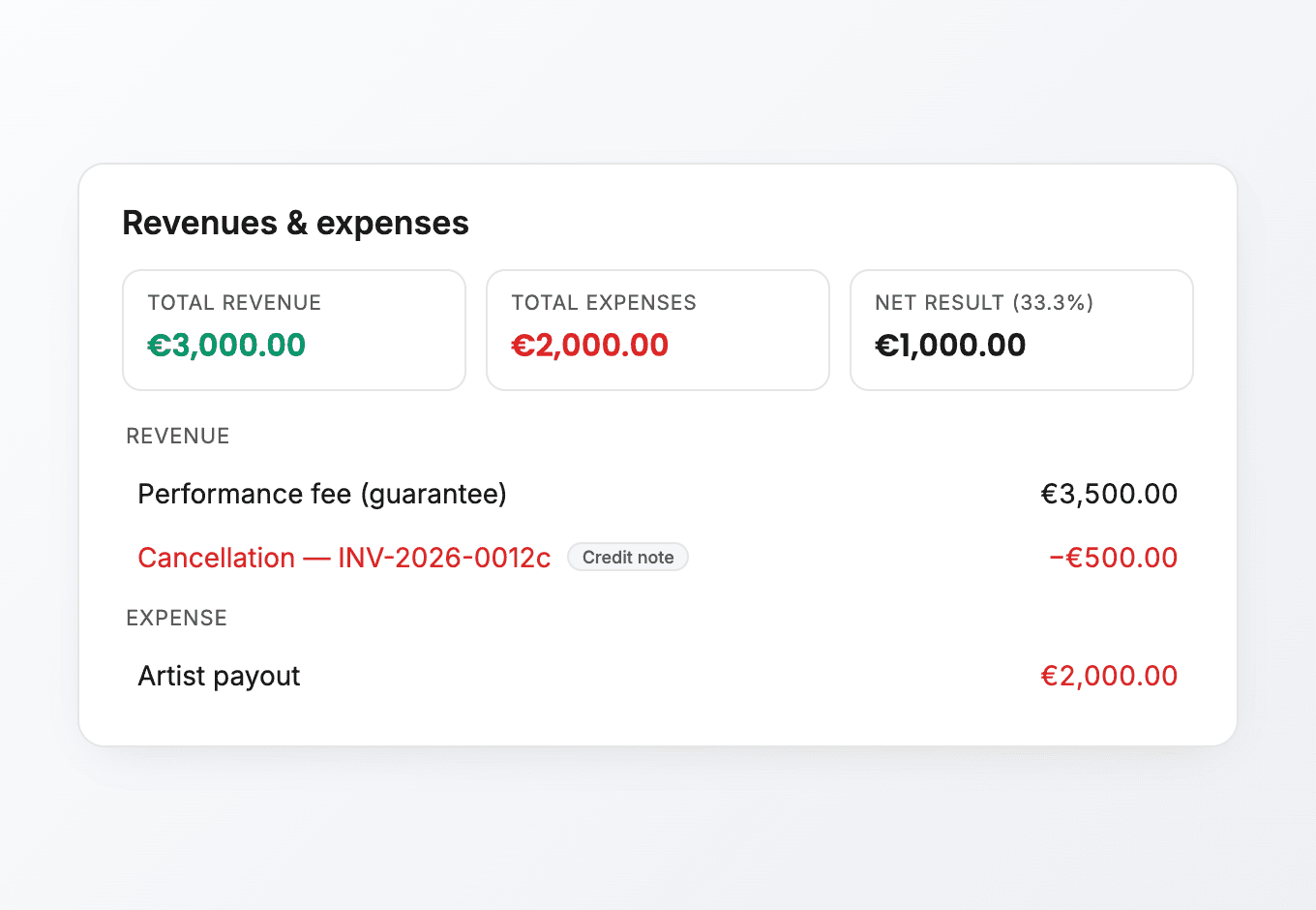
Your numbers stay correct. Each credit note posts a matching negative revenue line back to the show, shown in red with a Credit note badge in the Revenues & expenses card, so the event's net result reflects the reversal automatically.

Credit-note line in revenues and expenses
The credit note posts a negative revenue line, tagged in the event's financials.

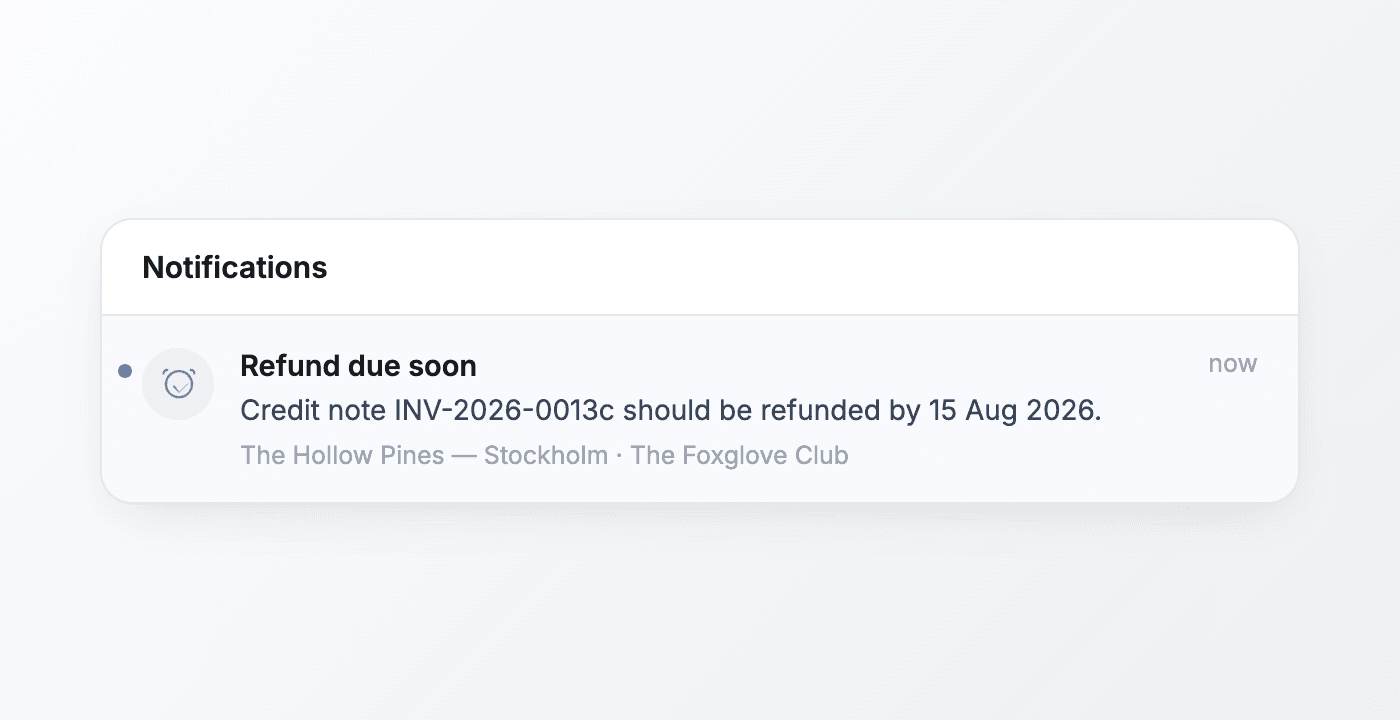
Never miss a refund. If a credit note carries a refund-by date, a reminder fires as that date approaches, so a refund you owe does not slip through.

Refund-due reminder notification
A reminder when a refund-by date is approaching.

@-mentions now notify your teammates

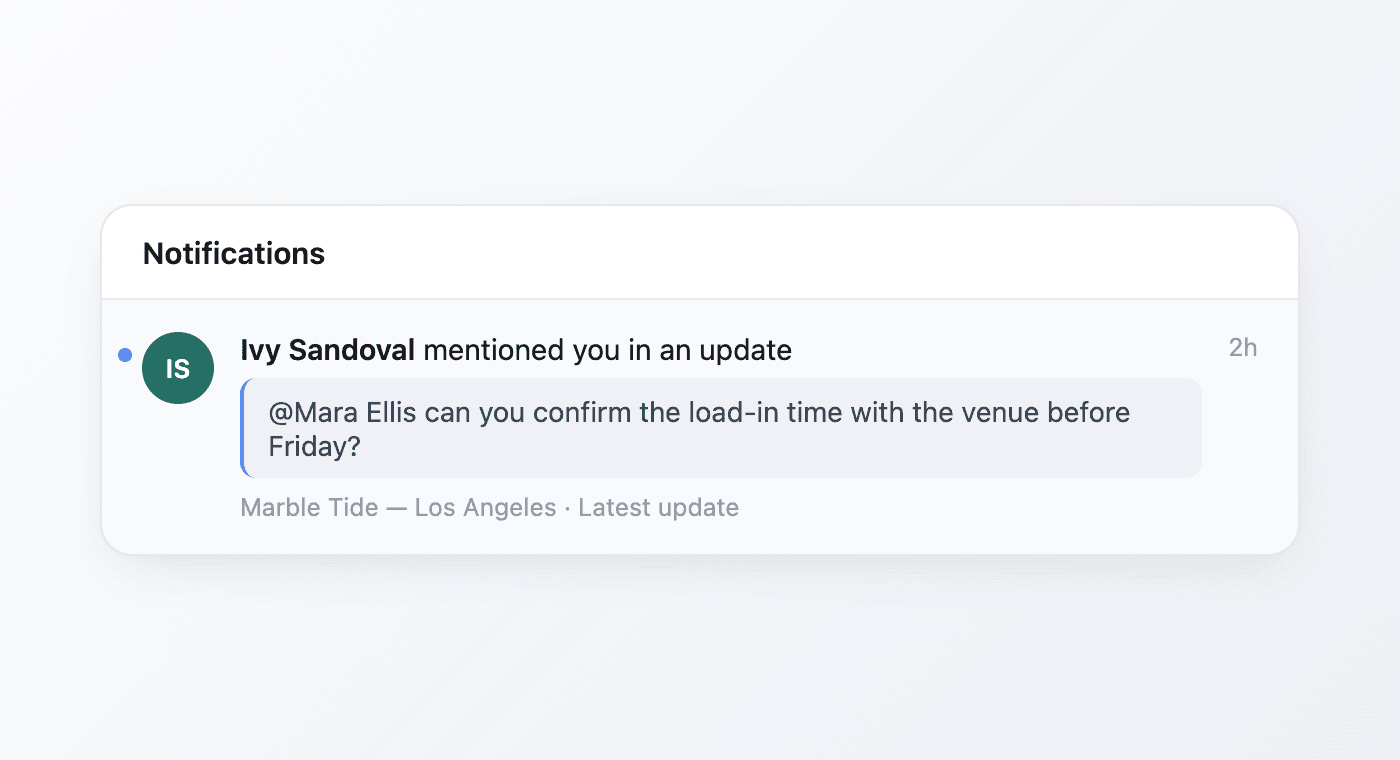
Mentioning a teammate now actually reaches them. Type @ and pick a colleague in an event update, a task, or a document, and they get a notification that links straight back to the exact place they were mentioned, with the surrounding text for context. Replies on an update thread also notify the people already in that conversation. So flagging someone is now a reliable way to hand off work.

Mention notification

Other changes

  • NewEnter a payment as a percentage of the invoice total, or as a fixed amount. Both work.
  • ImprovedReadable PDF filenames: exported contract and invoice PDFs are now named with the reference, artist, date, venue, and city, so they are easy to find on your computer.
  • ImprovedInstant invoice number: the next invoice number now appears in the create window the moment you start, before you save the invoice.
  • ImprovedDozens of refinements across the contract and invoice pages, the document editor, avatars, and menus.
  • FixedNotification toggles in settings now match exactly what each one controls, and a few that were not wired are now fully connected.
  • FixedA few interface labels that had stayed in English now appear correctly in German and French.